
Before There Were Lights
Written before a live studio audience

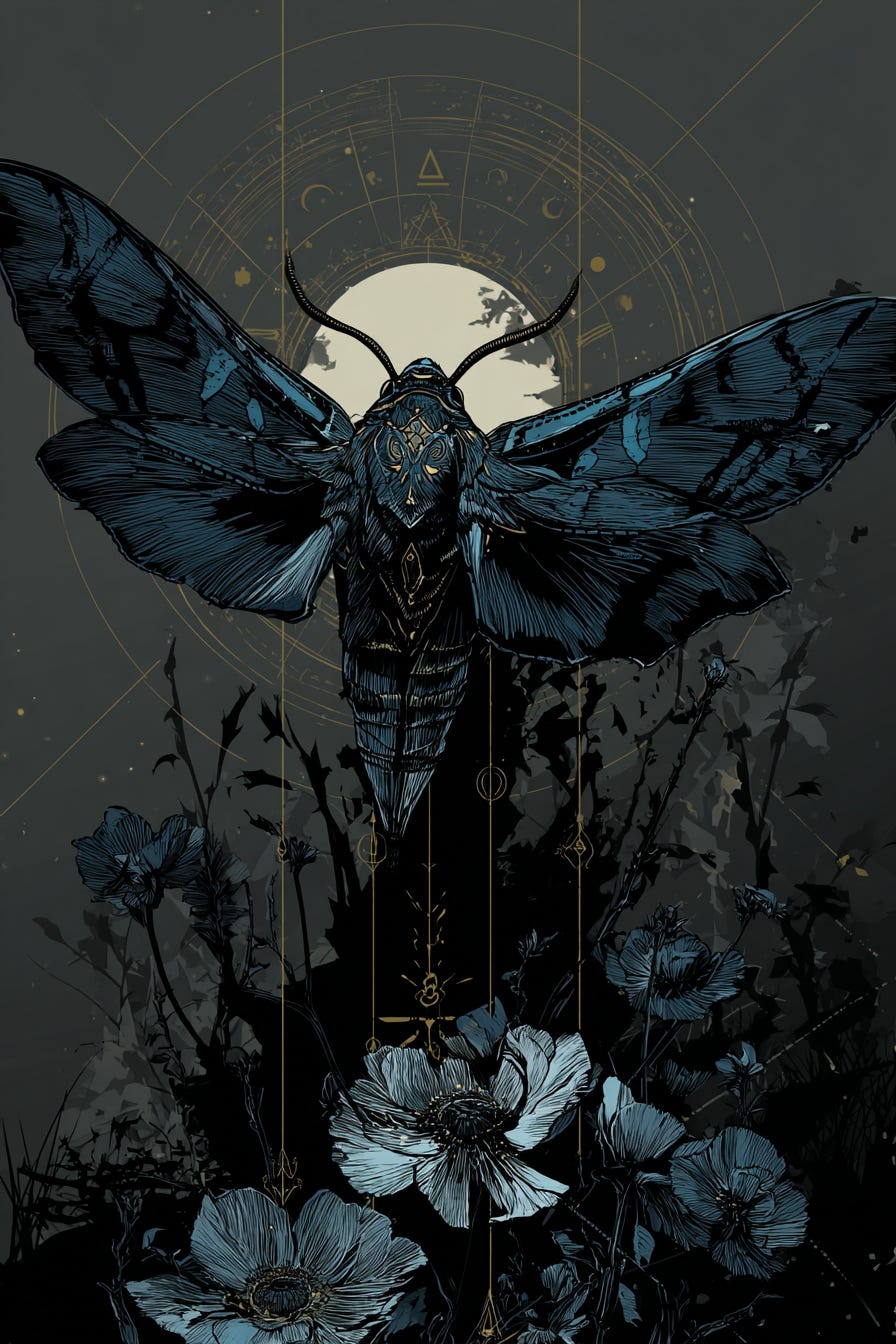
When I was a kid, my favorite nights in New York were when the summer was hot and the mystery of blackouts and brownouts just happened. You’re a kid. You don’t know what’s going on. You only know the entire night normally filled with tiny pearly lights from your building to the horizon, each a living thing, a place where people’s lives were moving, growing, learning, being, were all suddenly cast into darkness.
I doubted they were like me, loving the darkness. People need light. It is the difference between us and our cave-dwelling ancestors. But one night, I learned there were other, more important differences.
My mother didn’t allow us to go anywhere during blackouts. It wasn’t done. People had a habit of losing their inhibitions, going rogue, doing things they might not do if the streetlights were there to inhibit them. On the hottest and most unbearable nights, which inevitably caused people to use their air conditioners until they taxed the grid to breakdown, it was on those nights we learned just what the night was made of.
I was in my early teens, you know, the rebellious years between fourteen and twenty. Old enough to not listen to my parents and man enough to say I did what I wanted, regardless of the consequences.
I told my siblings to stay in the house, not to answer the phone, and that as far as the door was concerned, everyone who needed to be here had a key. So it stayed shut. I walked out the door and locked it behind me. I had a flashlight—something I made in shop class, a metal tube, batteries, and a tiny light wound into a spiral port. It was a jury-rig but it was mine, and I was going to take it out into the night.
I ran down the ten flights of stairs in the dark, knowing every step because I had counted them dozens of times, going up and down. I could do it in the dark, literally without lights, and reached the ground floor in under two minutes. There were people milling about in the lobby, though for the life of me I couldn’t figure out why. If you were going to embrace the dark, then you should be out there.
I already had a place in mind. There was a train station about twenty blocks from my home, which was a straight shot in the dark after I crossed several of the local overpasses that allowed the major freeway to pass through my neighborhood, separating two sides of town, one slightly better off than the other. My flashlight was in my backpack in case I needed it, but I knew this area. I would have brought my skateboard, but the darkness would have made it too hazardous.
I could barely dodge the potholes when I could see them. New Yorkers are an odd bunch. You would think most people stayed home when there was no power and only the moon to see by, but in my neighborhood people were out, being loud, a couple of barbecues were going on, and no one seemed perturbed in the slightest.
I loved the night. I thought the city was even more beautiful when there were no lights except for the cars on the freeway. When I got to the overpass, I stood and watched them flow beneath me, wondering where they were headed and what they thought of the sudden darkness. There weren’t too many cars on the road though; I think most people decided since the blackout had an indeterminate duration, no one wanted to be too far from home.
I was at the midpoint of the bridge when I saw it.
Nothing clear, nothing distinct, but I saw something in the headlights of the cars on the road. Whatever it was paralleled the freeway, and when it passed overhead, I froze. I could only see it against the backdrop of the stars—suddenly brilliant and then momentarily blotted out.
It passed over me several times, seeming to pace and shadow cars moving quickly beneath the bridge. Then it was gone. Like any other teenager, I attributed it to too many years of Channel 11’s Creature Feature Theater, a favored pastime of my youth. I was a fan of monster movies, and no matter how bad the film, I probably had a soft spot for it. My favorite B-movies included Them and Attack of the Crab Monsters. Movies so bad, Mystery Science Theater three decades later still wouldn’t feature either in their derisive panning of B-movies. Go figure.
I assumed whatever it was, my imagination was responsible for its existence. I resumed my mission to reach the train station; I still had a couple of miles to go. The neighborhood was filled with people sitting on their porches and smoking cigarettes. They smoked other things if they could get them, and the smell of low-grade reefer was wafting on the wind.
As I came off the bridge, down the large, wide steps suitable for skateboarding, I ran into a local who panhandled at the foot of the bridge. Old Pete had been a fixture for years — quiet, unassuming, mostly offering a benediction and little else. We assumed he was successful because he stood there for years, supported by schoolkids and people walking home from the train.
He wasn’t standing today, though. “Hey, Pete. How’s business?” I wasn’t supposed to talk to strangers, but I had to come this way for school, so inevitably we spoke, and continued to do so, despite my mother’s warnings of “stranger danger.”
“Where you be headed this time of night? You see the blackout, yes?”
Rhetorical, I knew, but something in the way he said it was unusual. “I’m on an adventure, Pete. I’m going to shine my flashlight toward my house so my sisters can see it.”
“The only light you should be shining is in your house. Not a fit night to be out. They’re flying tonight.”
Yes, Pete was homeless and prone to unusual pronouncements. We ignored them while dropping money or donuts into his hat. But this didn’t sound like his usual warnings of religious doom. “Who’s flying, Pete? What are you talking about?”
“Go home. Don’t turn on any lights until you get in your house. Stay away from the windows. Run across this bridge as fast as you can.”
“Not tonight, Pete. I have things to do. You be safe out here.”
Without a backward glance I ran toward the train station. My sisters were waiting for me to arrive. I bragged I could do it in under twenty minutes; I had in the past.
His hand grabbed my upper arm. His skin was rough, calloused, and frightening. He had never touched anyone before. His strength scared the hell out of me. I pulled, and found myself unable to get free.
“Do you know why we have lights in the city?” He pulled me close — closer than I had ever been to him before. His eyes glittered with moonlight and madness. My heart hammered in my chest. I felt like I could explode and run, but something held me frozen.
“To see at night?”
“To see? No, boy. It was to thin the herd.”
“Herd of what?”
“Listen.”
I wasn’t sure what to listen for. I could hear the cars whizzing by, but fewer than before. The people milling about—the tempo had changed. I saw people moving toward their homes, screen doors slamming, locking, along with the inner doors. I felt a difference in the air itself.
Pete sat and pulled me down with him. He put a finger to his lips. With the moon as the only light, I found I could see the entire street, everything lit with an eerie lunar glow.
It was then that I saw them.
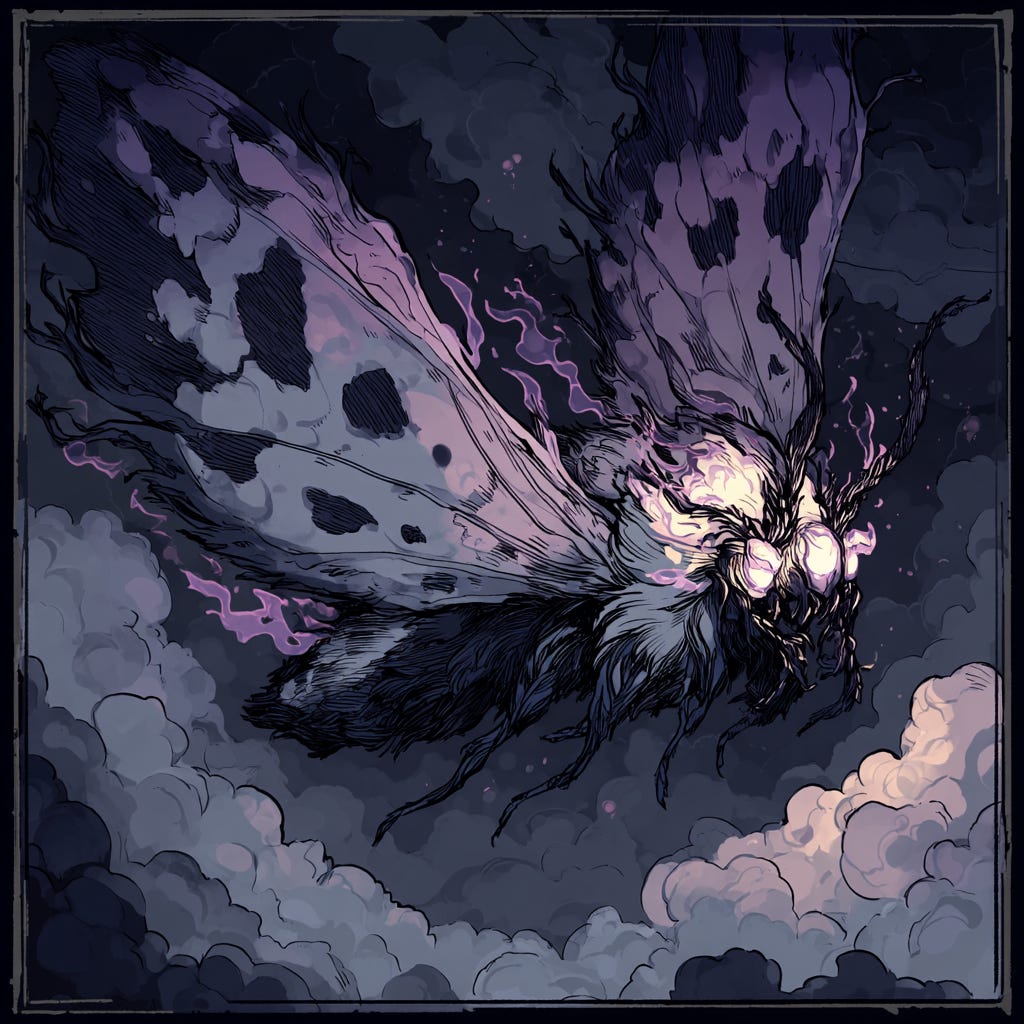
I thought they were birds. So many of them. They passed in front of the moon, and the light fluttered. Pete’s eyes narrowed — a knowing gaze of contempt, a look of pure hatred. They passed between us and the moon for five minutes straight.
The longer I watched, the more I realized they were not birds. They flew in a strange, chaotic fashion, wings flapping wildly but without a sound. I felt like I should get up and go home, but Pete wouldn’t let me. His grip tightened, dirty nails cutting into my arm.
Then I saw why.
Two young men, laughing, drinking from brown paper bags, were walking from the train station. Loud, boisterous, vulgar, passing the bag back and forth. Barely visible in the full moon light.
Then I blinked.
And there was only one.
He staggered. Looked around. Called out. He jumped when the bottle, his friend’s bottle, fell from the sky, landing in a muffled crash inside the bag.
Pete retreated deeper into the shadow beneath the overpass.
Seconds after the bottle broke, the man began to run, screaming for his grandmother to open the door. Ten steps. Just ten. There was a darkness between him and me. He saw me and I saw him.
Then he was surrounded by soft, fluttering forms, larger than a man but in the moonlight impossible to resolve.
When the fluttering ended, the street was empty.
Pete let me go. Blood trickled down my arm. I didn’t know what to say. I wanted to run, but I looked skyward and watched the stars flicker wildly, obscured, then revealed. Pete whimpered. He pointed. Two cars on the freeway were surrounded by flapping shadows, illuminated for a second by headlights before a crash plunged everything into darkness.
Then they took off into the sky. Buoyed by something I could not, would not, look at directly. My eyes refused to resolve them. It took all my willpower to watch the Cadillacs arc into the air before falling back to Earth — empty of passengers, doors missing, hoods savaged by terrible claws of my imagining.
I ran back across the overpass as shadows swept beneath it, plucking drivers from cars as accidents multiplied below. A frenzy. Like sharks that could fly. I ran faster than I ever had in my life.
I felt the fear every bit of prey feels when hunted by something against which it has no chance.
I crouched in bushes and fumbled for my makeshift flashlight. I twisted the wires together. The bulb flared—blinding after so much dark. I was only a few blocks from home, but suddenly there was no one on the street except me.
I didn’t know what that meant, and I had no intention of finding out. I bolted from the bush, hand in the bag, obscuring the light, scuttling like a crab, staring upward, waiting for the stars to go out.
As I crossed the street, I knew there would be no cover between me and the front door. I opened the bag and rolled the light behind me in the opposite direction. I heard the rush of air, nearly parting my hair, as I sprinted toward the building. Faces pressed against the plexiglass, waving in the moonlit gloom.
The fluttering stopped at the sound of the rolling light. I heard my backpack being shredded. I wasn’t going to make it. Fifty yards. I looked up and thought I saw my sisters on the terrace. A flicker of flame. A lighter.
And a childhood deviancy saved me.
Several paper airplanes, tips ignited, sailed out into the darkness. Don’t ask. I don’t know what possessed them. Maybe boredom. Maybe instinct. Kids do strange things without considering consequences.
Tonight, it was a godsend.
The shadows, finished with my backpack and waiting for me to move, took flight and engaged the tiny flaming fighters as they spiraled downward. As they extinguished each one, I gained ground. Then—like a miracle—more planes. From every window in the two facing tenements.
People leapt from shadows and ran for the building as the sky lit with flames and savage darkness. We ran together, gently helping one another, until we were safely inside.
The fire planes stopped soon after.
The shadows descended—each the size of a car—and paced the street, flipping trash cans, overturning cars, consuming anyone unlucky enough to remain outside. We watched. We screamed. We could not go out.
It took me an hour to climb those ten flights of stairs. My strength was gone. My sisters dragged me inside. We never told our parents what we thought happened. The destruction was attributed to riots and organized violence.
Crossing the overpass Monday morning, I could still see the wreckage of the Oldsmobile thrown from the bridge. Unimportant. I saw Pete too. Silent again. But he met my gaze with all the terror we shared, fresh as the rising sun.
“More than 13,000 people were reported missing in New York City last year. A percentage of those missing or their remains are never recovered.”
— New York Office of the Medical Examiner
Before There Were Lights © Thaddeus Howze, 2017